A living fossil: Ginkgo trees have been around for roughly 200 million years, meaning they existed alongside dinosaurs.
The last of its kind: Ginkgo is the only surviving species in its entire plant division. It has no close living relatives.
It survived the atomic bomb: Several ginkgo trees in Hiroshima survived the 1945 atomic bombing and are still alive today.
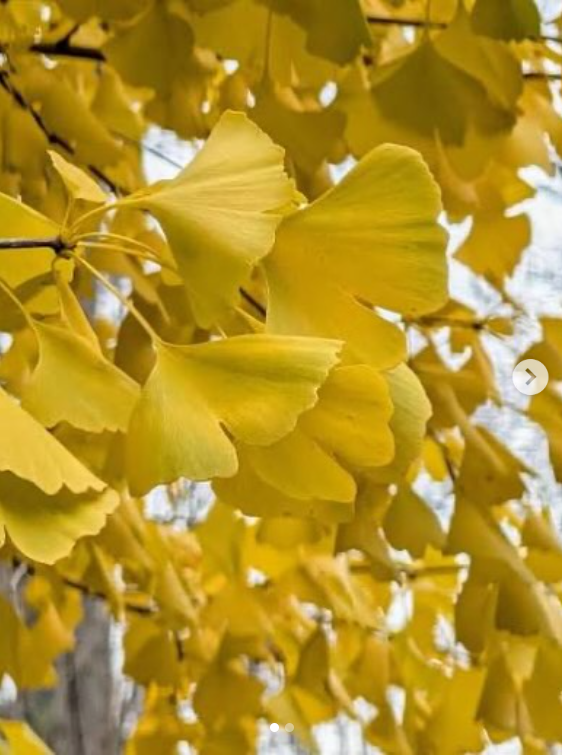
Graceful and distinctive: Its broad, fan-shaped leaves can reach about 4 inches wide and resemble maidenhair fern leaflets.
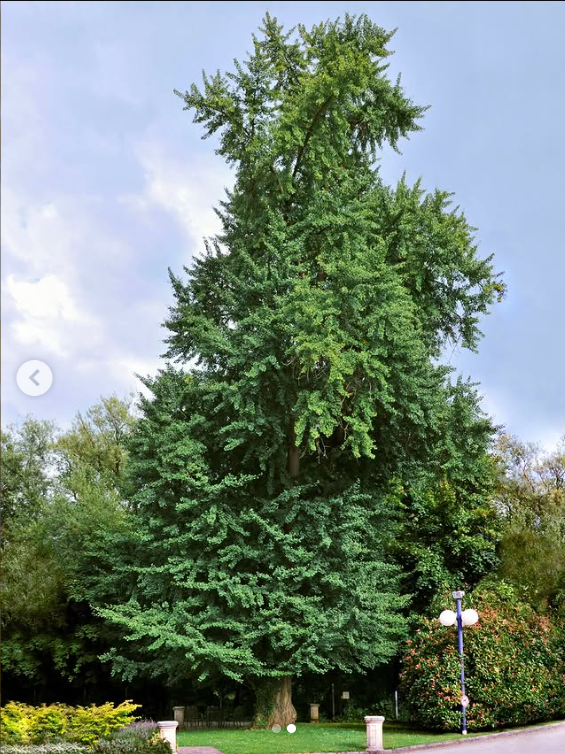
Impressive size: Can reach 70–100 feet, although most mature trees are closer to 35–50 feet.
Great urban tree: Excellent for streets and lawns, thanks to its tolerance of heat, air pollution, and both acidic and alkaline soils.
Low-maintenance: Generally resistant to insects and diseases and even shows resistance to oak root fungus.
Golden fall display: Its light-green leaves turn a striking golden yellow in autumn.
Give it room to establish: Young trees benefit from regular watering until established; mature trees generally need only occasional irrigation.
Pruning is simple: Older trees typically need little pruning beyond removing dead, broken, or weak branches.
Choose your tree carefully: Male cultivars are preferred for landscapes because female trees produce abundant, fleshy fruit with an unpleasant odor.
Popular cultivars: ‘Autumn Gold,’ ‘Golden Colonnade,’ ‘Princeton Sentry,’ ‘Presidential Gold,’ and ‘Saratoga’ offer different sizes and growth forms.
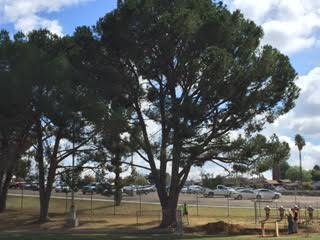
If you want to see one in person, you can find a few beautiful Ginkgo trees at the Mesa Marin Sports Complex and other areas around Bakersfield.
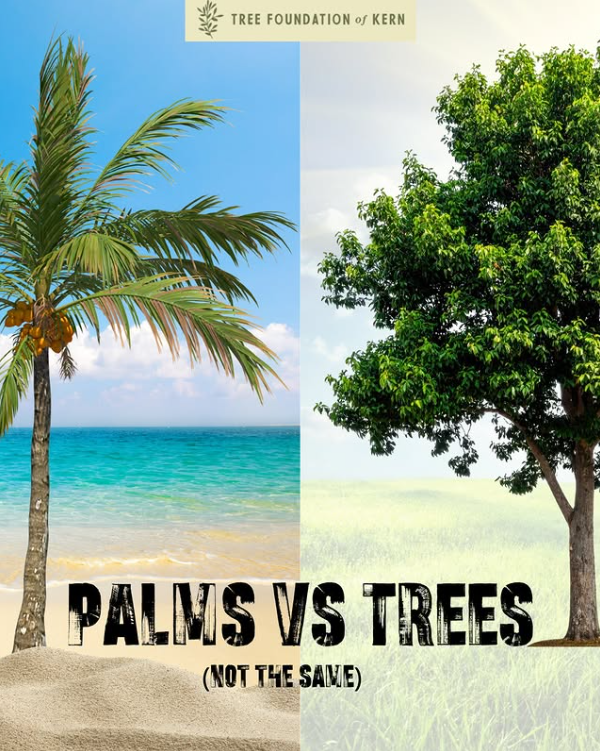
Most people call palms “trees,” but botanically they’re very different. Here are a few fun facts:
🌳 Trees are woody. They produce new wood every year, creating growth rings that can reveal their age.
🌴 Palms don’t make wood. They’re giant grasses (more accurately, monocots) with stems made of densely packed fibers instead of true wood.
🌳 Trees grow wider over time. Thanks to a layer called the vascular cambium, most trees increase their trunk diameter every year.
🌴 Palm trunks stay about the same width. Once the trunk forms, it doesn’t continue to expand like a tree’s.
🌳 Trees can recover from losing their tops. Many species can sprout new leaders or branches after damage.
🌴 A palm has one growing point. If the bud at the top (the “heart”) is killed, the entire palm usually dies.
🌳 Tree roots become woody and structural. They anchor the tree and expand over time.
🌴 Palm roots remain similar in diameter throughout their life. Instead of getting thicker, palms continuously produce new roots from the base of the trunk.
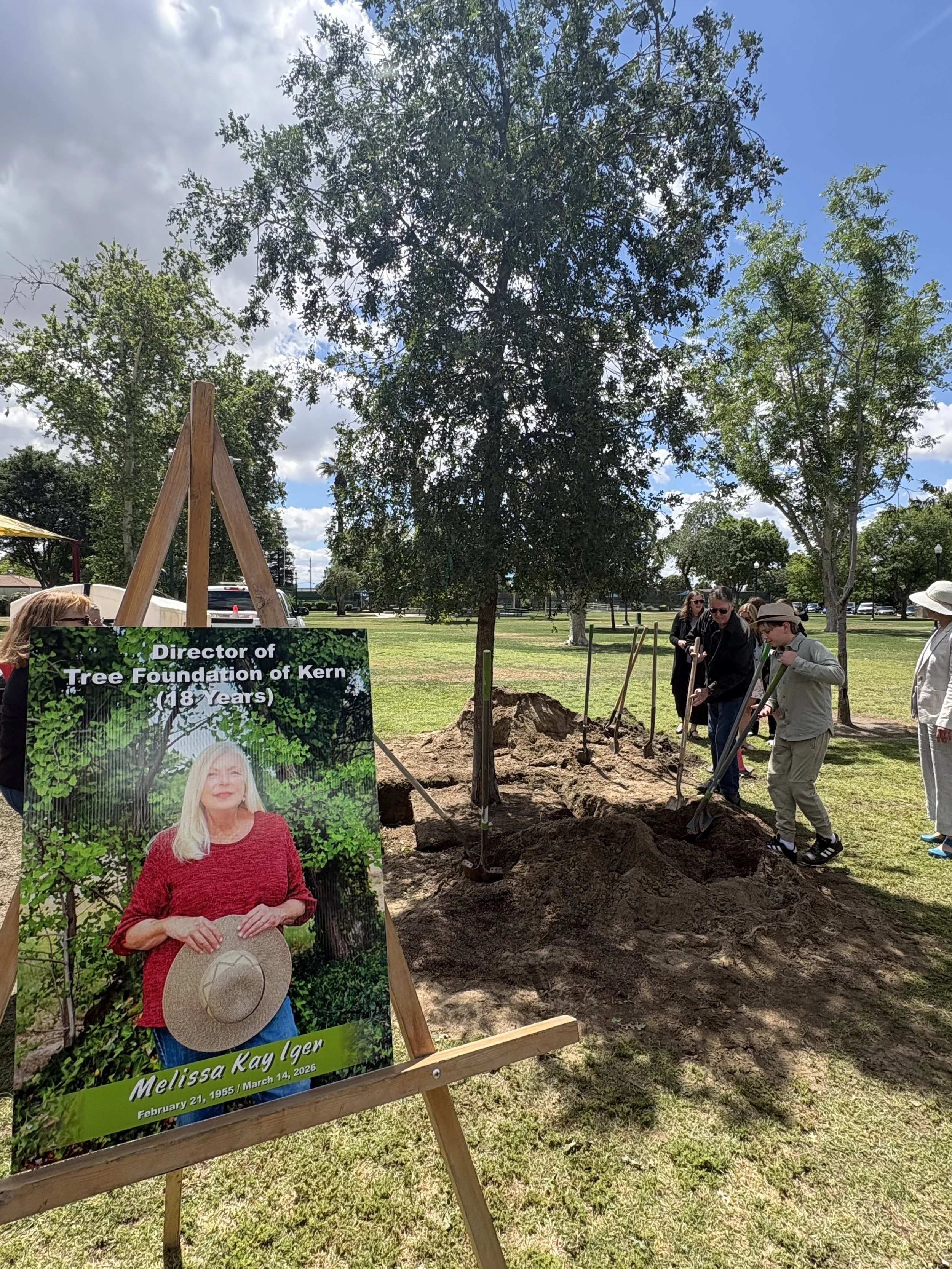
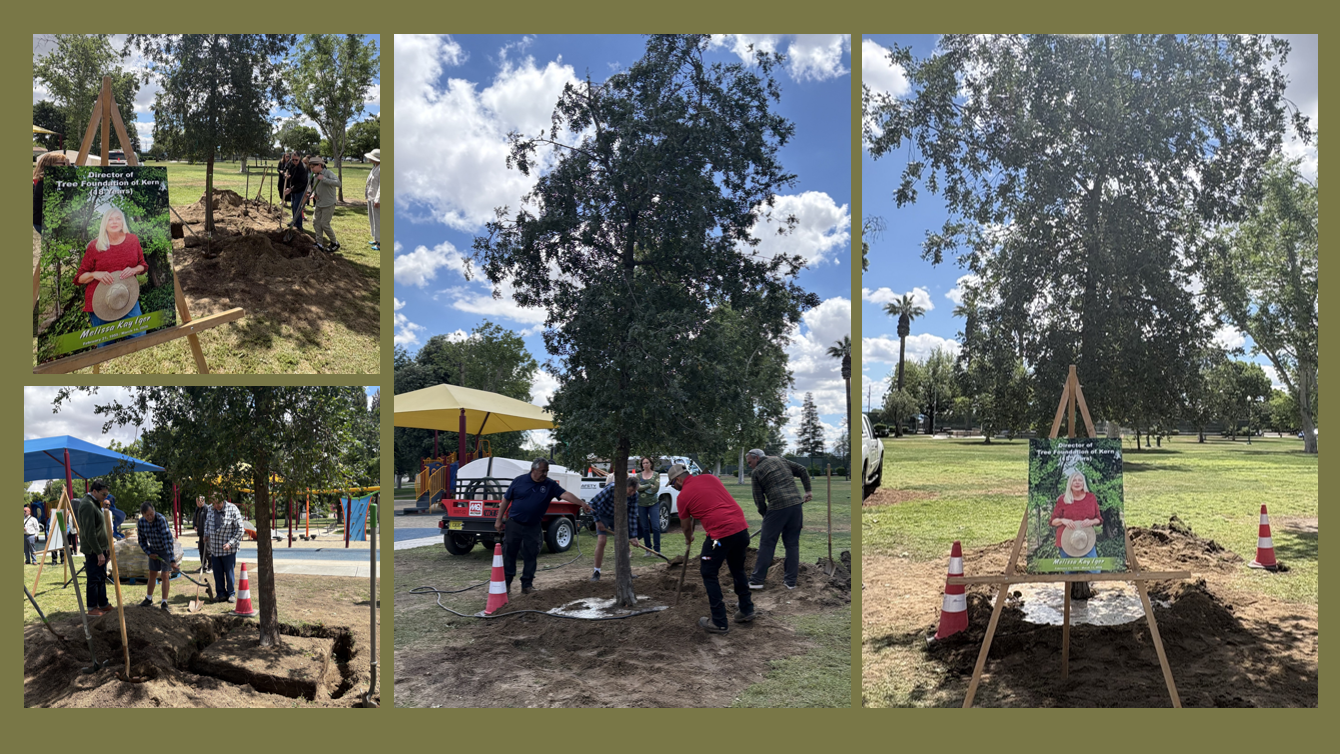
As the Tree Foundation of Kern (TFoK) closes one chapter and begins another, we are excited to announce the introduction of our new weekly segment, “Tree Talk Tuesday”. Each week, we will post and discuss trees and tree-related topics in, or relating to, Kern County.
For our first post, we would like to recognize one of the most influential people in the history of the Tree Foundation of Kern, the late Melissa Iger. Melissa served nearly two decades as the Executive Director of the TFoK before her passing on March 14, 2026, but her passion and commitment continue to live on through its active members. The roots she established for the TFoK will continue to serve as the foundation for TFoK’s future.
In honor of Melissa, a Valley oak (Quercus lobata) was planted at Jastro Park on April 22, 2026. The Valley oak is California’s largest native oak, and its ability to withstand Kern County’s hot, dry summers makes it an excellent choice for tree enthusiasts to plant in our region. A mature Valley oak can live for more than 500 years and provides valuable habitat for countless wildlife species, making it one of California’s keystone trees.
The resilience and importance of the Valley oak reflect Melissa Iger’s resilience in life and her importance to the Tree Foundation of Kern and to everyone who had the opportunity to know her.
If you get the chance, go check out Melissa’s tree on the west side of the kids’ toy area at Jastro Park. Until next time, have a Tree-mendous week!