
Tree Training and Pruning
Trees that grow to be large are more structurally sound and cost-effective to maintain when trained with a central dominant leader that extends 30 feet or more into the crown (Fig. 1, left). Vigorous, upright branches and stems compete with the central leader can become weakly attatched (Fig. 1, right).
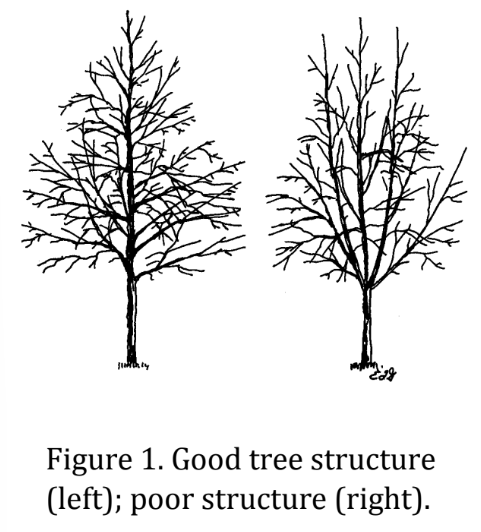
Trees with branches spaced along the central leader, or trunk, (Fig. 1, left) are stronger than trees with branches clustered together (Fig. 1, right). Prune newly planted trees to one central leader by shortening competing stems (Fig. 2). All branches and stems should be shorter than the central leader after pruning is completed (Fig. 2, right).
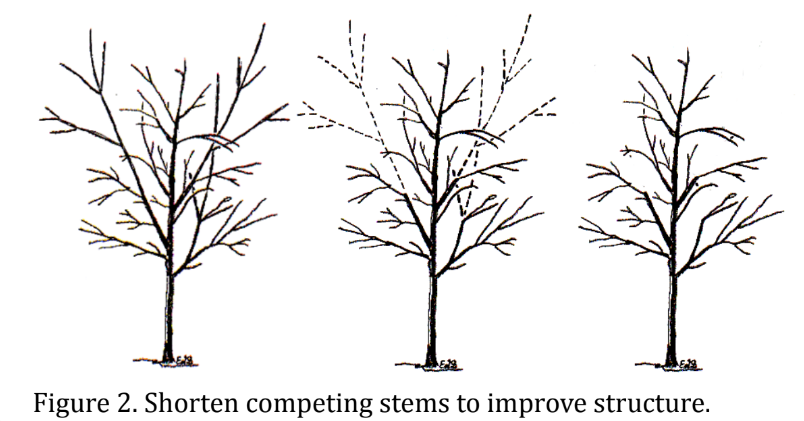
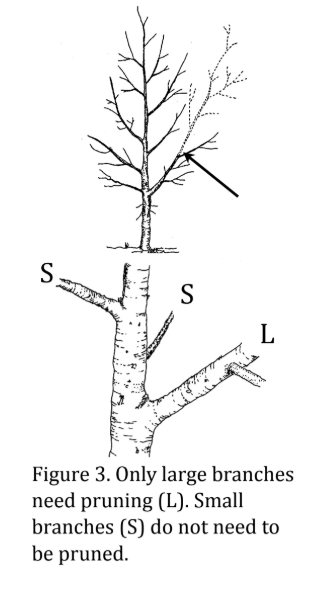
Shorten or remove branches that are larger than half the trunk diameter at planting and every few years thereafter. Shorten them by cutting back to a live lateral branch (Fig 3, top drawing). This lateral branch should be pointed away from the trunk and it should not be growing upright. The central leader should be more visible in the crown center after pruning. Only large-diameter branches need to be pruned because they compete with the leader and could be weakly attatched (Fig 3, L). Small branches (Fig 3, S) do not need pruning because they will not compete with the leader.
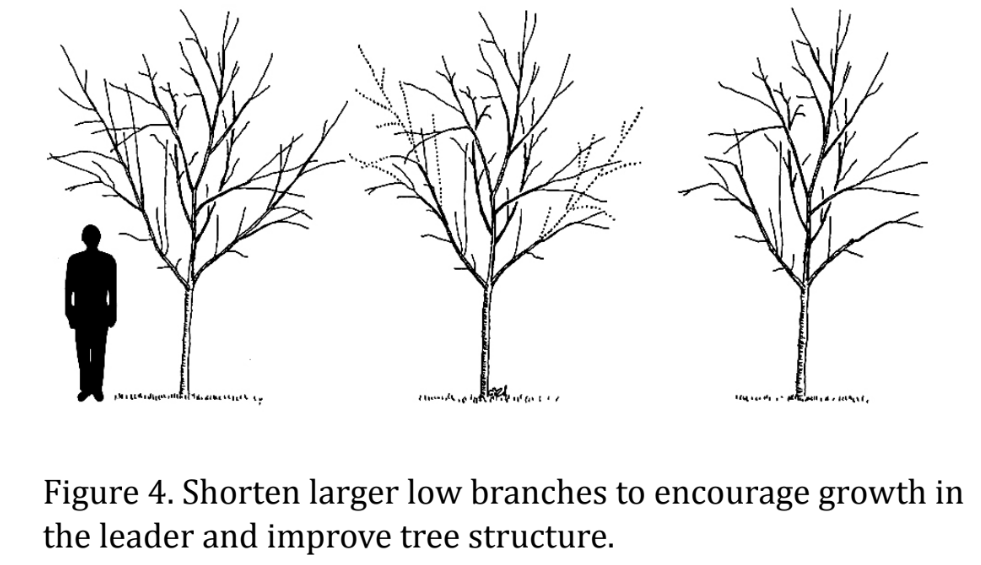
Shorten the largest low branches when the tree is young to keep them small (Fig 4). These shortened branches may be removed later for clearance; removing small branches creates smaller wounds with less likelihood of decay.
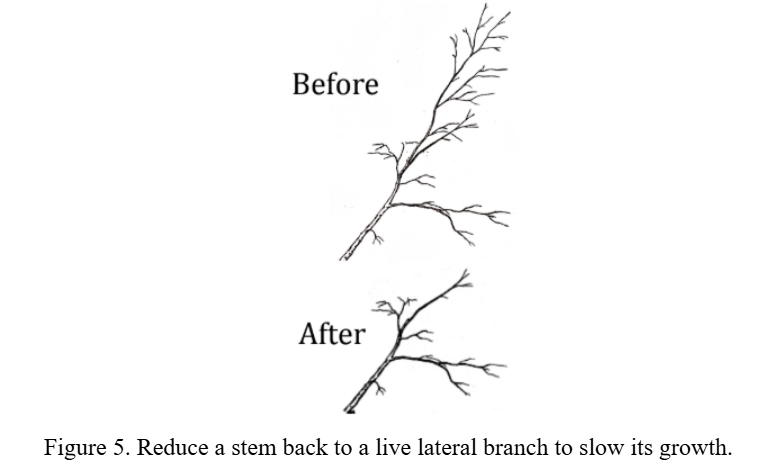
The best way to shorten large or long stems and branches is to cut them back to a live lateral branch (Fig 5). This slows growth on the pruned parts and encourages growth in the dominant leader creating sound structure.
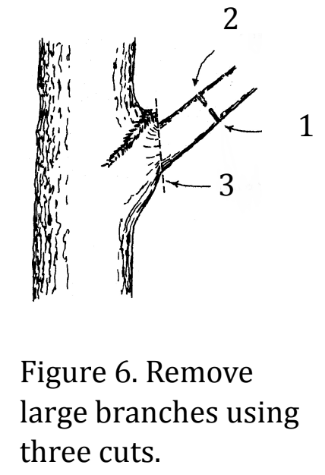
Remove larger branches by making three cuts (Fig. 6). This prevents the bark from peeling or splitting off the trunk below the cut. Make the final cut back to the branch collar (enlarged area around union of branch and trunk).
Structural Pruning Checklist
Develop and maintain a central leader
Identify the lowest branch in what will become the permanent crown.
Prevent branches below the permanent crown from growing larger than half the trunk diameter.
Space main branches along the central leader.
Reduce vigorous upright stems back to lateral branches.
Pruning Safety
Prune from the ground using proper tools and safety equipment. Do not prune near power lines.
Copyright © 2010 Edward F. Gilman and Brian Kempf www.urbantree.org